Agentic RAG With LangGraph for Agentic Workflows and LlamaIndex for RAG
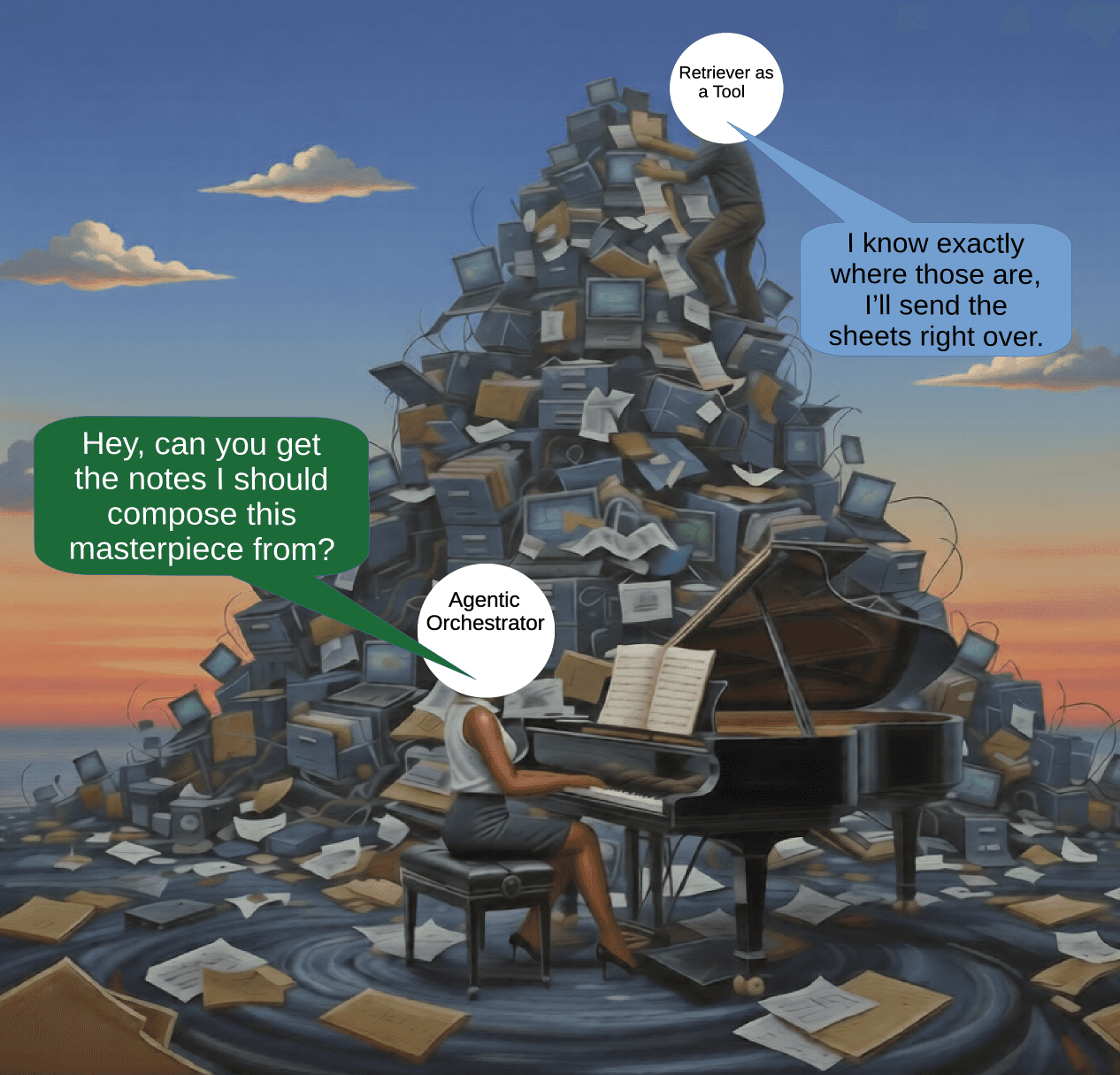
In the current landscape of LLM application development, a hybrid architecture has emerged as a powerful tool. This approach recognizes the strength of LlamaIndex for retrieving the right information, and LangGraph for orchestrating agentic workflows automating multi-step problem solving. When combining LlamaIndex for data management and LangGraph for agentic logic, developers can make systems both highly informed and highly capable.
LlamaIndex: The Specialized Retrieval Engine
LlamaIndex is a top choice for Retrieval-Augmented Generation (RAG) at Codachord. It’s amazingly effective for processing documents with complex layouts like PDFs, emails, research docs, financial reports, or legal contracts. It’s reliable for efficiently converting unstructured and semi-structured data into digestible formats for LLMs. Hallucinations are reasonably minimized through good query transformations and reranking.
LangGraph: The Orchestration Framework
A good way to think of it is LlamaIndex is a library handling the knowledge, while LangGraph is the researcher looking up information and writing a report. LlamaIndex finds and provides the relevant information when asked. While your researcher (AI flowing through LangGraph) is able to decide which questions to research, pull information from multiple “books" (data sources), determine whether more info is needed, and choose best next steps. To do this, LangGraph manages agentic flows, allowing agents to loop, self-correct, and maintain state during long, multi-step tasks.
LangGraph also has a lot of tools and integrations (e.g., databases, calendars, payment systems, search engines, GitHub, Salesforce, AWS, Tableau, Slack, Stripe, Jira, Google Docs) making it ideal for agents interacting with external systems. Additionally, it has reliable state management with short-term memory and checkpointing, which lets it remember where it was between data requests and retrievals to make coherent decisions across a long workflow.
Choosing Your Architecture
To understand the trade-offs, consider the following.
RAG focus: A legal-tech startup building a platform to analyze thousands of 200-page contracts.
Primary Tool: LlamaIndex.
Why: The challenge is 90% retrieval accuracy. They need specialized parsing for legal clauses and hierarchical indexing to handle massive document lengths. They may only use a simple LangChain/LangGraph wrapper for the final chatbot UI.
Agentic focus: A Digital Chief of Staff that manages a founder’s calendar, emails, and travel bookings.
Primary Tool: LangGraph.
Why: The challenge is 90% reasoning and tool use. The agent must check a calendar, browse flights, get founder’s confirmation, and then book. The knowledge base is small (e.g., a few preferences and instructions), so advanced RAG is secondary to the more complex state management and multi-step tasks.
Enterprise Approach: Combine LangGraph and LlamaIndex, with the retriever as a tool.
Why: In many modern enterprise environments, LlamaIndex and LangGraph are elemental components of a single stack, where LlamaIndex does the retrieval, because this has turned out to be a reasonably reliable architecture for larger more complex projects.. Both libraries have extensions specifically made to work with each other.
LlamaIndex as a LangGraph Retriever: Index your data with LlamaIndex, then create a retriever from this index. This retriever can be used directly with LangGraph for question/answer chains. LangGraph then handles incorporating the retrieved documents into the prompt context for the LLM. This is a fairly standard, and extremely useful RAG set up to “chat with your data.”
LlamaIndex Query Engine as a LangGraph Tool: For larger scale projects a LlamaIndex QueryEngine can be wrapped as a LangGraph Tool. An agent can then decide if it needs to query the knowledge base(s), and it can use the tool to do so, and even do that in loops until it reaches a the highest quality answer as it considers info from other agents as well. This is an effective, although more expensive, agentic RAG architecture.
Remember:
Agents are more capable, but they make more LLM calls, which quickly increases cost and reduces speed. Build agents only when your use case requires their complexity (complex reasoning, multi-step problem solving, or lots of tool interactions). It's well established that LangChain/LangGraph can turn a simple problem into a mountain of basically Python functions in wrappers…but if the problem is complex enough then LangGraph is an excellent tool.
Always integrate human-in-the-loop checkpoints in high stakes sequences. LangGraph has components specifically for doing this.